Ba Duan Jin 八段锦
A detailed "User Manual" about how to practice Ba Duan Jin
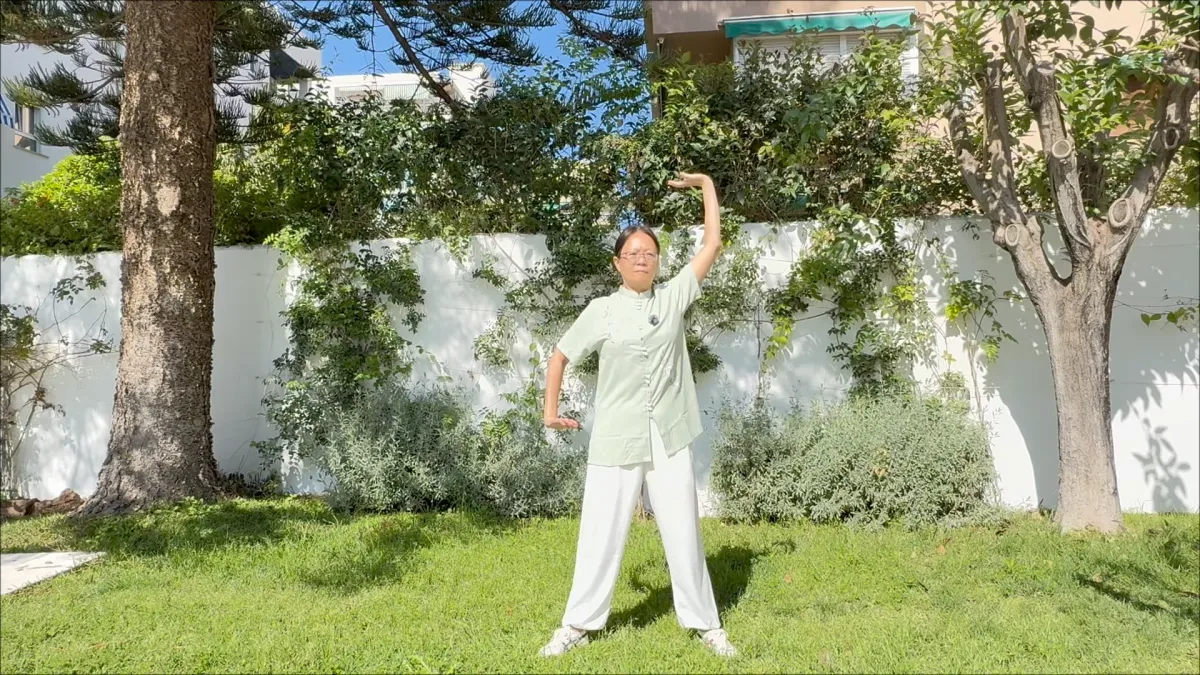
I am filming a video introducing the practice of Ba Duan Jin, and realised that there is too much information for one video if I include all the fundamentals. I would be talking way too much! As a result, here is a “user manual” of this video and all the future videos (there will be a few) including Ba Duan Jin practices.
What is it?
Ba Duan Jin is a Taoist practice. Internationally, the word “Tai Chi” is often used for Taoist forms of physical practice, whilst in fact, Tai Chi means “supreme ultimate” which is represented by the black and white Tai Chi symbol that most people are familiar with. It refers to the philosophical concept. The actual physical practice forms are many. Ba Duan Jin is one of them that has a wide reach for over 100 years. It is quite common that people practice it solely for fitness, just like many people only practice asanas of Yoga. It is a valid choice as they do provide clear health benefits to our muscles, joints, and fascia. But it is also important to know that, just as Yoga asana is only the first stage of Yoga practice, Ba Duan Jin, or any other forms of Tai Chi exercises, are also meant for preparing our body and mind for further reach for enlightenment.
What does it mean?
The name, “Ba” means “eight”, “Duan” means “piece”, and “Jin” means “brocade”, a high-quality silk fabric that has a particular shine. From the name, we can deduce that the practice has 8 forms, and the moves should have a soft and fluid continuity.
Why is it a good exercise and how to practice?
The eight forms of Ba Duan Jin are each designed to target one or two specific meridians. Completing the whole practice is like performing a full-body massage.
One very important concept of Taoist practice is to connect to nature and collect the “Qi” (life energy) from nature to nourish the being of ourselves. In order to do so, we need to first make ourselves receptive, by tuning in, being aware, and becoming absorbent. This purpose determines the practice to have an expansive quality. We open up the space within ourselves to allow the collected “Qi” to come in, to be stored, and processed. We also stir and activate the “Qi” within ourselves to be available for external connections.
How does the breathing work?
Breathing is extremely important. In each form, the breathing is three-part: inhale-hold-exhale. Inhale to create the space; hold the breath and use it as a fuel for the movement; then exhale to let go. The breath retention part is unique and, depending on the move, can be quite long. So as a practitioner, it is important to link to your own body and adjust the speed of movements. Whilst aiming for long, smooth, and regular breathing cycles, everyone’s lung capacity is different. Be kind to yourself and don’t over-push.
The way of breathing
During the practice, we should use “belly breathing”, that is, starting the breathing cycle by puffing up the abdominal area. It is very important to notice that the movement sequence is:
- Actively pushing the abdominal wall forwards and to the sides, creating a large chamber with lower pressure;
- Allow the air to get into this chamber.
It is NOT breath in and use the air to push the belly out. This important difference defines the intention of practice - the practitioner and the outside world are in a cooperative connection. It is a relationship of inviting and accepting the invitation, neither driving nor being driven.
The stance
In film and photos, we often see Tai Chi practitioners taking a very low horse stance, legs very far apart, and squatting very low. Unfortunately, most of us don’t have that level of physical strength. The common “layman’s stance” can be rather high with the knees bending only mildly. One common injury in Tai Chi style practice is indeed knee injury because we try so hard to “look the part”. Link to your own body; exercise compassion to your own joints. Over time, you will get stronger and naturally go lower. To look like Bruce Lee should not be the purpose of the practice.
The eyes
In movement and focus of eyes are also important in Ba Duan Jin practice. Because it is a moving meditation, our energy direction and intention is equally important, if not more, as the movement of the limbs and the body. Eyes are the vessel to direct and express this intention. Modern medical studies also tell us how eye movements are closely related to our nervous system. There are cues for the eyes to follow the hands, to push the eyeballs to the corner of the eyes, to stare hard, or to look inwards. They are all important components of the practice.
For your information, here are the eight forms in Chinese and English, along with their primary meridian focus:
- 双手托天理三焦 Two Hands Hold up the Heavens to Regulate the Triple Focuses
- Focus: Regulates the Triple Focuses (Sanjiao) meridian. This exercise stretches the entire torso, promoting the smooth flow of energy (Qi) through the upper, middle, and lower cavities of the body.
- 左右开弓似射雕 Drawing the Bow to Shoot the Hawk
- Focus: Targets the Lung and Large Intestine meridians. The expansion of the chest improves respiratory function and strengthens the heart and lungs.
- 调理脾胃须单举 Separating Heaven and Earth to Regulate the Spleen and Stomach
- Focus: Balances the Spleen and Stomach meridians. The opposing vertical stretch massages the internal organs and improves digestion.
- 五劳七伤向后瞧 Wise Owl Gazes Backward to Prevent Five Fatigues and Seven Illnesses
- Focus: Stimulates the Du Mai (Governing Vessel) and the Bladder meridian. This twisting motion releases tension in the neck and spine, helping to clear "stagnant Qi" that leads to chronic fatigue.
- 摇头摆尾去心火 Swaying the Head and Wagging the Tail to Expel Heart Fire
- Focus: Regulates the Heart and Small Intestine meridians. By lowering the centre of gravity and moving the spine, it helps "cool" the body and reduces emotional stress or "heart fire."
- 两手攀足固肾腰 Two Hands Hold the Feet to Strengthen the Kidneys and Waist
- Focus: Strongly stimulates the Kidney and Bladder meridians. This deep forward fold stretches the spine and strengthens the lower back, which is considered the "home" of the Kidneys in TCM.
- 攒拳怒目增气力 Clenching the Fists and Glaring Fiercely to Increase Strength
- Focus: Targets the Liver and Gallbladder meridians. In Traditional Chinese Medicine, the Liver is connected to the eyes and the emotion of anger; the "glare" helps vent Liver Qi and increase physical vitality.
- 背后七颠百病消 Bouncing on the Toes Seven Times to Eliminate All Diseases
- Focus: Affects the Ren Mai (Conception Vessel) and Du Mai (Governing Vessel). The gentle vibration of landing on the heels shakes the entire body, smoothing the flow of Qi across all twelve primary meridians.