Before the Swing: Finding Equilibrium in an All-or-Nothing World
Are We Seeking Balance, or Just Talking About It?
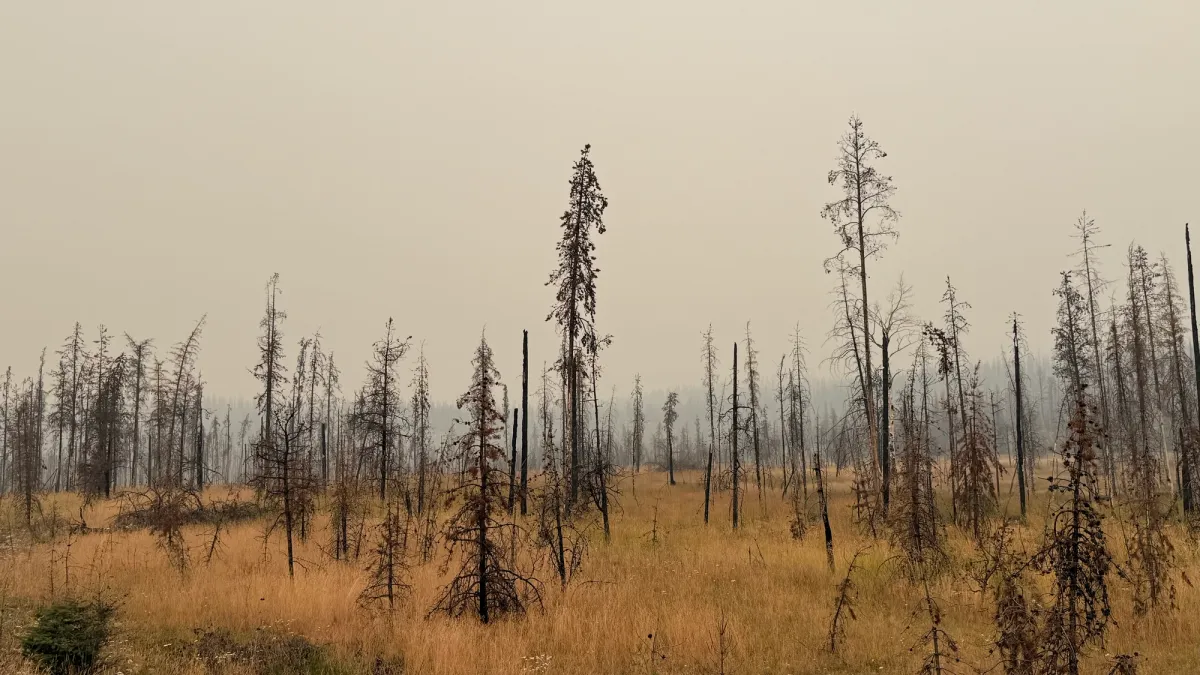
I just came back from summer holiday - a fantastic trip to Canada. The beauty of Canadian Rockies totally surpasses my already-super-high expectations. However, there was also one thing that dampened the mood: the wildfires. There were a number of them in Alberta, in British Columbia, and also in the neighbouring US. For us tourists, it was a real bummer that we could not enjoy some of the world-famous views. For some of the locals, it meant evacuating from homes and wondering if they would ever see their houses again.
Luckily I was not near any of the fires. But I did see what wildfire can do when I saw miles and miles of burned trees in Jasper area, left from the major wildfire two years ago. The view was petrifying, and surreal. It is incomprehensible how the fire could spread so wide and engulf so many trees whilst we human could not do anything to intervene. And this was the question that was put to our guide during a lake cruise trip. His answer got me thinking.
The trees have their natural life cycle. After a certain number of years, they die. They remain standing in the forest, whilst becoming a valuable source of habitat or nutrition to other organisms, they gradually dry out. If lightening strikes during a dry season, they are prone to catching fire. BUT, in a functional ecosystem, the dead trees burn out, maybe taking a few other trees around with them, and then the fire naturally dies out. What is left from the fire, is more nutrient to the forest bed for the other trees to thrive.
The indigenous people used to do forest management in their own way. They used to deliberately leave campfires near the dead trees to allow them to catch fire and burn down. The healthy young trees around would be able to resist the moderate heat and not catch fire. It functioned well for many years but didn’t always work out perfectly. So fires did also get out of control here and there. Then, modern civilization stepped in with a zero-tolerance policy, banning these controlled burns completely. By trying to eliminate all fire, we allowed dead trees to accumulate and forests to grow unsustainably dense. When a spark hits today, the resulting inferno burns with an extreme heat that mocks our modern firefighting technology.
I don’t pretend to be an expert on wildfires now. Far from it. What it got me thinking, is how we are accustomed to go from one extreme to another, and only come to realisation when faced with unwanted consequences. We come to embrace a certain idea, giving it so much force that the pendulum starts to swing. Yet we forget to consider the momentum of this swing. As a result, sometimes the pendulum hit hard onto something we treasure; and sometimes when we are lucky, we catch the pendulum in the last moment before crushing, and have to put a greater oposite force on it. Well, then it starts to go, perhaps too heavily, to the oposite direction.
Think of Yoga poses. Balancing poses are always hard. To do a tree pose, you have to transfer the body weight to one leg before you pick up the other leg. During the pose, the ankle and foot of the standing leg have to do a constant dance to counter any shift of the body weight. You don’t wait till almost falling to make an adjustment. You don’t make a judgement about the sides of your body and decide to lean over to the “good side”. You breathe, and try to find the balance point, constantly adapting.
Balance is one of the most talked-about concepts of our time. We constantly debate work-life boundaries, eco-equilibrium, and the future of human-AI integration. Yet, as I reflect on the forests of the Rockies and the subtle shifts of a yoga pose, I’m left with a question: Are we genuinely practicing balance, or are we just obsessing over the idea of it? Perhaps true equilibrium isn't a final destination we can control or legislate, but a quiet, continuous choice to stop the pendulum before it swings too far.